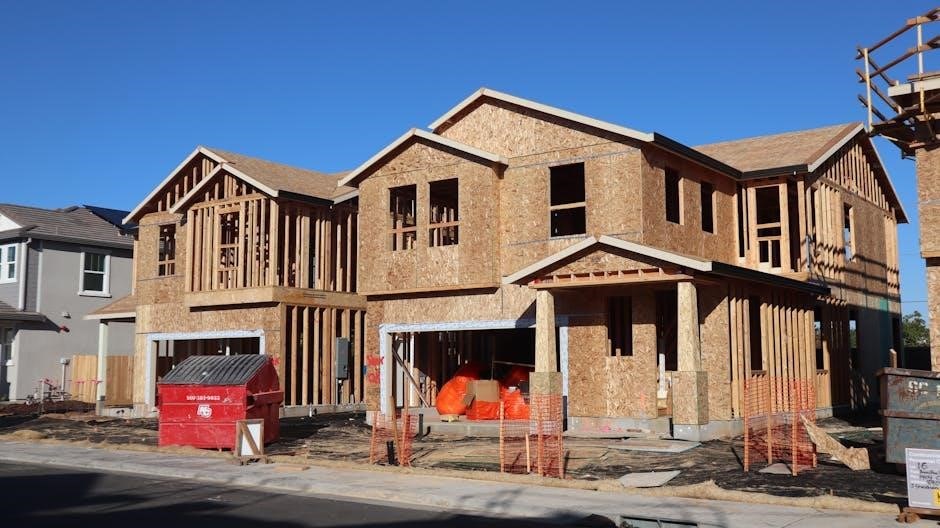
California Home Improvement Contract PDF: A Comprehensive Guide
Navigating California’s home improvement landscape requires a solid contract. This guide details essential elements, referencing the CSLB’s sample contract (updated July 31, 2025), ensuring clarity and legal protection for both parties involved in the project.

Understanding the Importance of a Written Contract
A comprehensive written contract is paramount in California home improvement projects, safeguarding both homeowners and contractors. Oral agreements are notoriously difficult to enforce, leading to disputes over project scope, costs, and timelines. The California State Contractors State License Board (CSLB) strongly advocates for detailed written agreements, offering a sample contract as a valuable resource (published July 31, 2025).
This document clearly outlines expectations, minimizing misunderstandings. It establishes the project’s specifics – from the description of work and materials to the agreed-upon price and payment schedule. A well-defined contract protects homeowners from unexpected charges or substandard work, while simultaneously ensuring contractors receive fair compensation for their services. It also clarifies crucial details like start and completion dates, change order procedures, and warranty information.
Furthermore, a written contract is essential for exercising legal rights, should disputes arise. The CSLB emphasizes that the Notice of Cancellation, if applicable, must be mailed to the contractor’s address as stated within the contract itself. Ignoring this vital step can lead to significant legal and financial repercussions for all involved.
Key Elements of a California Home Improvement Contract
A legally sound California home improvement contract, as exemplified by the CSLB’s sample (updated July 31, 2025), must contain specific elements. Firstly, clear identification of both the contractor – including license number – and the property owner, alongside the property address, is crucial. The contract must detail a comprehensive “Description of the Project,” outlining the work to be performed and the “Significant Materials” utilized.
Financial aspects are equally vital. The “Contract Price” must be explicitly stated in dollars and cents, alongside a detailed “Payment Schedule,” including any “Downpayment” amount. If “Finance Charges” apply, they require transparent disclosure. Crucially, the contract should define “Approximate Start Date” and “Approximate Completion Date,” establishing project timelines.
Furthermore, provisions for “Change Orders” and a clear understanding of warranty information are essential. The contract should also address the possibility of cancellation, referencing the homeowner’s right to a “Notice of Cancellation.” Adherence to these elements ensures a legally enforceable and mutually protective agreement.
Contractor Information and Licensing
California law mandates stringent requirements for contractor identification within home improvement contracts. As highlighted in the CSLB’s sample contract (updated July 31, 2025), the full “Business Name of Licensed Contractor” must be prominently displayed. Equally important is the inclusion of the contractor’s unique “Contractors License No.” – verification of which is strongly advised by the CSLB.
The contract must also feature the complete “Contractor business address, city, state, zip code, telephone number,” providing a clear point of contact. This detailed information ensures transparency and accountability. Proper licensing demonstrates the contractor’s adherence to state regulations, including insurance and competency standards.
Homeowners should independently verify the license status via the CSLB website before signing any agreement. A valid license protects consumers from unscrupulous operators and guarantees a level of professional conduct. Failure to include accurate licensing information can render the contract legally questionable.
Owner Information and Property Details
A legally sound California home improvement contract, as exemplified by the CSLB’s sample (updated July 31, 2025), necessitates precise owner identification. The contract must clearly state the “Owners Address or address where work is performed,” establishing a definitive location for the project and correspondence. This address serves as the official record for all contractual matters.
Beyond the owner’s address, the contract implicitly requires accurate property details, though the sample form doesn’t explicitly list them. Including the property’s full address, parcel number, and legal description provides an additional layer of clarity and avoids potential disputes regarding the work’s location.

Accurate property information is crucial for permitting, inspections, and potential mechanic’s lien claims. Ensuring this information is correct from the outset streamlines the project and safeguards both the homeowner and the contractor. Any discrepancies should be addressed and corrected before contract signing.
Project Scope and Detailed Description
The heart of any California home improvement contract, per the CSLB’s sample (updated July 31, 2025), lies in a comprehensive project scope. The contract explicitly requires a “Description of the Project and Description of the Significant Materials to be Used and Equipment to be Installed.” This isn’t merely a summary; it’s a detailed narrative outlining exactly what work will be performed.
Vague descriptions like “kitchen remodel” are insufficient. Instead, specify tasks: “Remove existing cabinets, install new Shaker-style cabinets, replace countertops with granite, install new sink and faucet.” Detail material specifications – brand, model, color – to avoid misunderstandings. The more specific, the better.
This section should also address what’s not included. Clearly stating exclusions prevents scope creep and potential disputes. A well-defined scope protects both the homeowner and the contractor, ensuring everyone understands the project’s boundaries and expectations. Multiple lines are provided in the sample contract for this detailed description.
Materials and Equipment Specifications
Building upon the “Project Scope,” the California home improvement contract (CSLB sample, July 31, 2025) demands detailed material and equipment specifications. This section isn’t redundant; it’s a focused expansion of the scope’s material mentions. While the scope outlines what materials are used, this section details which specific products.
Include brand names, model numbers, colors, and quantities. For example, instead of “granite countertops,” specify “Uba Tuba granite, 3cm thickness, 120” x 24” slabs, quantity: three.” Similarly, list appliance models, flooring types, paint brands, and fixture specifications.

This level of detail minimizes ambiguity and protects against substitutions without prior approval. The CSLB sample contract provides ample space for these descriptions. Accurate specifications are crucial for obtaining accurate quotes, ensuring quality workmanship, and resolving potential disputes regarding material quality or appearance. Clear documentation is key.

Contract Price and Payment Schedule
The California home improvement contract (CSLB sample, dated July 31, 2025) must clearly state the total contract price in dollars and cents. This figure represents the complete cost for all work, materials, and labor as defined in the project scope and material specifications. A blank space is provided in the sample contract for this amount: “$________________.”
Crucially, the contract must also detail the payment schedule. If no progress payments are anticipated – meaning payment is due upon completion – a checkbox indicates this. Otherwise, a detailed schedule outlining payment milestones tied to specific project phases is required. This schedule should specify the amount due at each stage.
The contract also addresses potential finance charges, with a designated space to indicate any applicable fees (“$________ ____ ___ _”). Transparency regarding all costs, including potential finance charges, is paramount for a legally sound agreement. Accurate financial details protect both the homeowner and the contractor.
Down Payment Regulations in California
California law strictly regulates down payments for home improvement projects. The CSLB sample contract (updated July 31, 2025) includes a specific section for the down payment amount, designated as “$________________” if applicable, or “none” if no down payment is required. It’s vital to understand these regulations to ensure compliance and avoid legal issues.
Generally, down payments cannot exceed 10% of the total contract price or $1,000, whichever is less. This limitation protects homeowners from excessive upfront financial burdens. Any down payment exceeding these limits is considered unlawful and can result in penalties for the contractor.
The contract must clearly state the down payment amount and its purpose. Furthermore, contractors are legally obligated to disclose any financing charges associated with the project. Proper documentation and adherence to these regulations are crucial for a valid and enforceable home improvement contract in California.
Finance Charges and Disclosure Requirements
Transparency regarding finance charges is paramount in California home improvement contracts. The CSLB’s sample contract (dated July 31, 2025) explicitly includes a line for “Finance Charge: In dollars and cents (if any, if not applicable, put “none”) $________ ____ ___ _.” This underscores the legal requirement for clear disclosure.
If a contractor charges finance fees – for example, if a homeowner finances the project through the contractor – these charges must be itemized and explained in detail within the contract. The annual percentage rate (APR) and the total amount of finance charges must be conspicuously displayed.
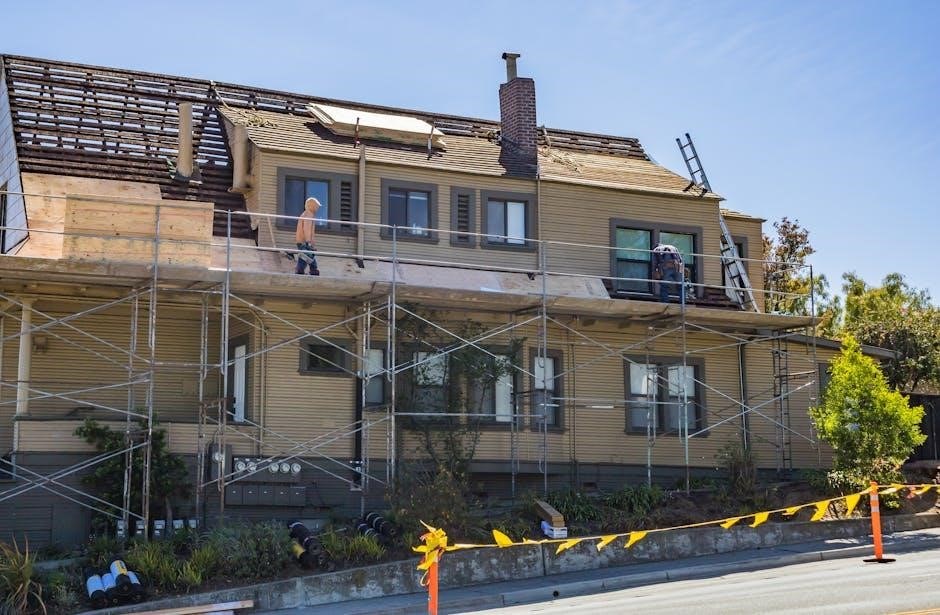
Failure to properly disclose finance charges can lead to significant penalties, including contract rescission and legal action. California law aims to protect consumers from hidden fees and ensure they fully understand the financial implications of their home improvement projects. Accurate and complete disclosure is non-negotiable.
Start and Completion Dates
Establishing clear timelines is crucial for a successful home improvement project, and the California home improvement contract, as exemplified by the CSLB’s sample (July 31, 2025), directly addresses this. The contract includes designated spaces for “Approximate Start Date” and “Approximate Completion Date.” These dates, while often estimates, provide a foundational understanding of the project’s expected duration.
It’s important to note the use of “approximate.” Unforeseen circumstances – weather delays, material shortages, or unexpected structural issues – can impact the schedule. However, a well-defined initial timeline sets expectations and allows for proactive communication regarding potential adjustments.
The contract should also define what constitutes “substantial completion,” triggering payment milestones. Delays beyond reasonable expectations may necessitate contract modifications or, in some cases, legal recourse. Accurate dating and clear definitions are vital for protecting both the homeowner and the contractor.
Change Orders and Contract Modifications
Inevitably, projects evolve. The California home improvement contract, mirroring the CSLB’s sample (dated July 31, 2025), must address how changes to the original scope of work are handled. These alterations are formalized through “Change Orders” – written documents detailing the modification, its cost impact, and any adjustments to the completion schedule;
A valid Change Order requires mutual agreement and signatures from both the homeowner and the contractor. Verbal agreements are insufficient and legally unenforceable. The Change Order should clearly describe the revised work, specifying materials, labor, and any associated costs.
Modifications to the original contract, beyond simple changes, may require a completely revised agreement. It’s crucial to maintain meticulous records of all Change Orders, attached to the original contract, to avoid disputes. Failure to properly document changes can lead to significant financial and legal complications for both parties.
Cancellation Rights and Notice of Cancellation
California law grants homeowners specific cancellation rights regarding home improvement contracts, particularly those exceeding $1,000. Referencing the CSLB’s sample contract (July 31, 2025), homeowners generally have three business days to cancel a contract after signing, without penalty. This “cooling-off” period allows for reconsideration.
To exercise this right, a written “Notice of Cancellation” must be delivered to the contractor within the three-day timeframe. The CSLB sample contract specifies the contractor’s address for cancellation notices. This notice should clearly state the homeowner’s intent to cancel and include contract details.
Cancellation is effective upon receipt of the notice by the contractor. Any payments made by the homeowner must be promptly refunded. Exceptions exist, such as contracts for emergency repairs or work already substantially completed. Understanding these rights and adhering to the proper notification procedures is vital for protecting homeowner interests.
Warranty Information and Dispute Resolution
A comprehensive California home improvement contract, like the CSLB’s sample (dated July 31, 2025), should clearly outline warranty details for both labor and materials. Warranties protect homeowners against defects arising after project completion, specifying the duration and scope of coverage. Explicitly defining what is covered – and what isn’t – minimizes future disputes.

The contract should also detail a dispute resolution process. This might involve mediation, where a neutral third party assists in reaching a mutually agreeable solution. Alternatively, arbitration, a more formal process with a binding decision, could be specified. Clearly outlining these steps avoids costly litigation.
Homeowners should carefully review warranty terms and dispute resolution clauses before signing. Understanding these provisions ensures recourse in case of issues and promotes a smoother contractor-client relationship. A well-defined process fosters transparency and accountability.
Mechanic’s Lien Rights and Protection
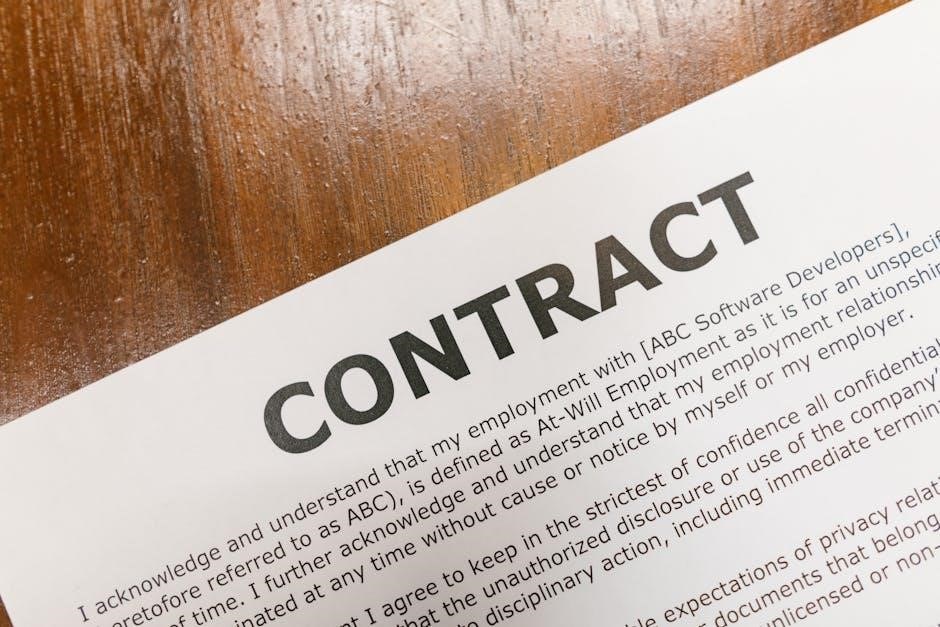
California law grants contractors a mechanic’s lien right, a legal claim against your property if you fail to pay for completed work or materials. A solid home improvement contract, referencing resources like the CSLB’s sample (July 31, 2025), must address this crucial aspect. Understanding these rights is vital for both homeowners and contractors.
The contract should detail procedures for waiving lien rights, often achieved through partial lien releases as progress payments are made. Homeowners should insist on these releases to protect themselves from inflated claims. Conversely, contractors need to follow proper notification procedures to preserve their lien rights.
Failure to adhere to these requirements can invalidate a lien claim. Homeowners should be aware of deadlines for filing a stop notice, further safeguarding their interests. A clear understanding of mechanic’s lien laws, as outlined in the contract, prevents potential legal battles and ensures fair compensation for services rendered.
Permitting and Inspections Responsibilities
A comprehensive California home improvement contract, like the CSLB’s sample (dated July 31, 2025), explicitly defines responsibilities regarding building permits and inspections. Clearly outlining who obtains necessary permits – homeowner or contractor – is paramount to avoid legal complications and project delays.
The contract should specify which inspections are required and who schedules them. Often, contractors handle this, ensuring work meets local building codes. However, the homeowner bears ultimate responsibility for ensuring permits are secured and inspections passed.
Failure to obtain proper permits can result in fines, stop-work orders, and even the need to dismantle non-compliant work. The contract should detail consequences of permit-related issues. A well-defined section protects both parties, ensuring a legally sound and safely executed home improvement project, referencing relevant local regulations.
Legal Review and Resources (CSLB)
Before signing any California home improvement contract, especially utilizing templates like the CSLB’s sample (last updated July 31, 2025), independent legal counsel is strongly advised. An attorney can clarify complex clauses and ensure the contract adequately protects your interests.

The California State License Board (CSLB) offers invaluable resources. Their website (cslb.ca.gov) provides guides, publications, and a contractor’s license verification tool. Utilizing these resources helps confirm a contractor’s legitimacy and good standing.
The CSLB also mediates disputes and investigates complaints. Familiarize yourself with their complaint process should issues arise. Remember, the sample contract is a starting point; tailoring it to your specific project and seeking professional advice are crucial steps. Prioritize understanding your rights and responsibilities for a successful and legally sound home improvement experience.